Product Description
Integrating barcode and RFID technologies with ERP (Enterprise Resource Planning) software can greatly improve operational efficiency and accuracy.
The following are important aspects of barcode and RFID ERP integrations:
Real-Time Data Synchronization: Both barcode and RFID systems enable real-time synchronization with the ERP system, ensuring that inventory levels, asset locations, and other essential data remain up to date.
Automated Data Acquisition: These integrations facilitate automated data acquisition, which decreases the reliance on manual data entry, thereby reducing human error and enhancing data precision.
Enhanced Inventory Control: RFID technology enables rapid and precise scanning of large volumes of items, which, when combined with an ERP system, streamlines inventory management and increases accuracy.
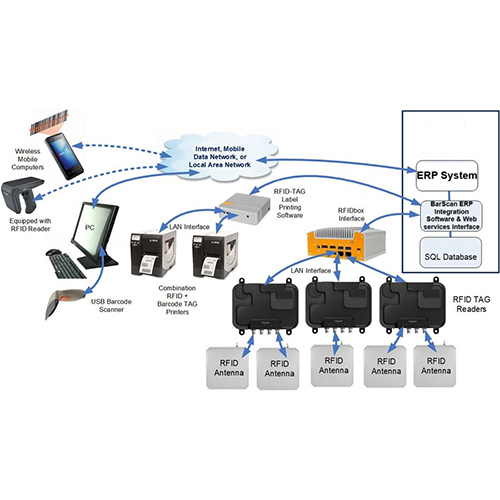
Improved Supply Chain Transparency: The integration of RFID readers with ERP systems enhances supply chain transparency, allowing organizations to monitor raw materials, work-in-progress items, and finished goods more effectively.
Cost Efficiency: The combination of automated data capture and real-time updates can result in cost reductions by lowering labor expenses, increasing inventory turnover, and decreasing errors.
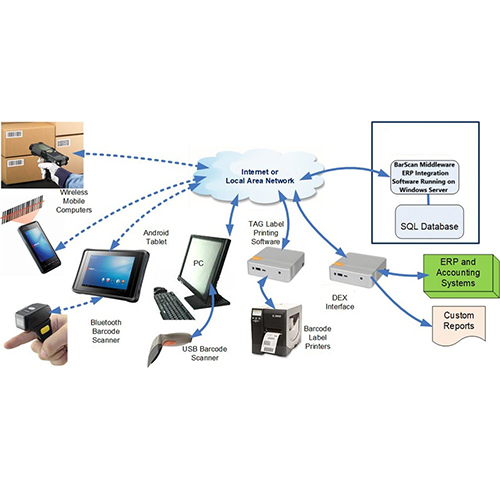
Middleware Solutions: In some cases, middleware may be required to support the integration, ensuring seamless data transfer between the barcode or RFID systems and the ERP system.
Would you like further information on implementing these integrations or examples of successful applications?
Seamless Integration with Leading ERPsBarcode RFID ERP Integrations connects with SAP, Oracle, Microsoft Dynamics, Tally, and other prominent ERP systems, ensuring smooth data flow between your business operations. Its flexible API and web service connectivity support both on-premise and cloud deployments, making the integration efficient and adaptable to changing enterprise IT landscapes.
Comprehensive Compliance and SecurityThe platform is fully compliant with GDPR and ISO 27001, ensuring that sensitive business information is handled with the utmost integrity. End-to-end encryption and role-based user access control safeguard your data, meeting global security standards and building trust within your organization and among your partners.
Versatile Support for Barcode and RFID StandardsSupporting industry-standard barcode formats (1D, 2D, QR Code, DataMatrix) and RFID standards (EPC Gen2, ISO 14443, ISO 15693), the software caters to a wide range of scanning and automation requirements, making it suitable for inventory, asset tracking, sales, procurement, and manufacturing processes across diverse industries.






 Send Inquiry


