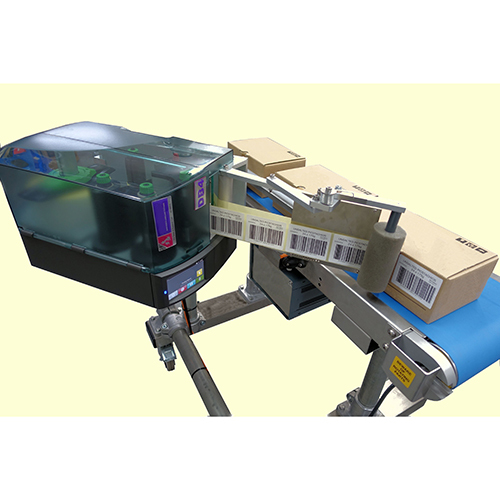
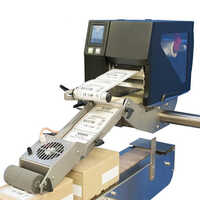
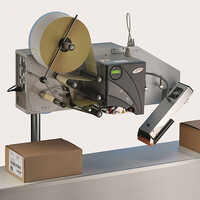
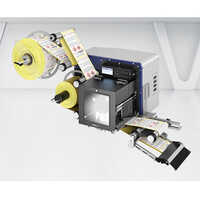
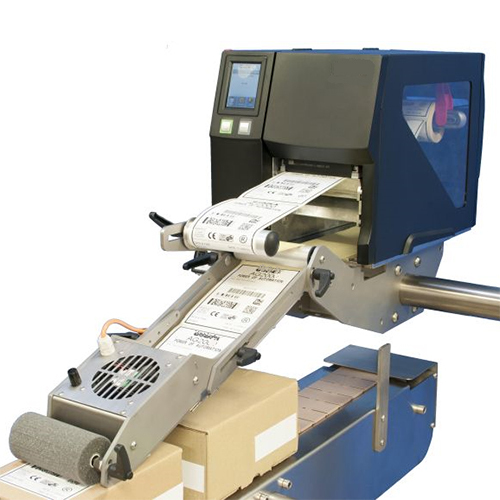
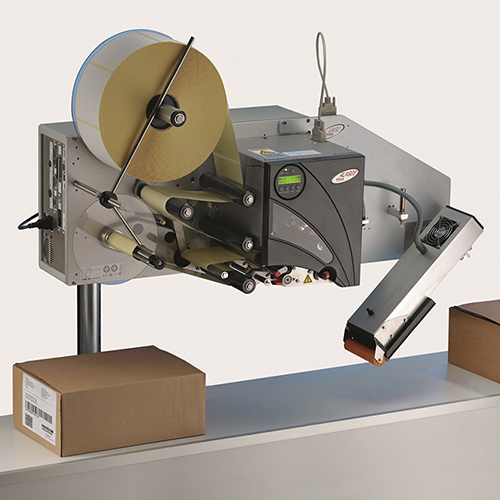
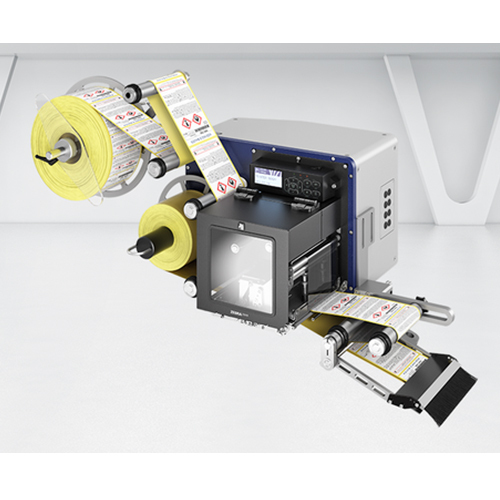
Industrial Print and Apply Systems, below mentioned are details including their types, features, and use cases--are meant for high-speed, high-accuracy labeling in manufacturing and logistics environments.
What Is an Industrial Print & Apply System?
An automated solution that prints variable data (e.g., barcodes, batch codes, expiry dates) and immediately applies labels to products, cartons, or pallets. It integrates with ERP/WMS systems and supports real-time traceability.
Core Components
- Print Engine: Industrial-grade thermal transfer or direct thermal printer (Zebra, SATO, etc.)
- Applicator: Mechanism that applies the label--varies by surface and speed
- PLC Controller: Manages print/apply timing, communicates with upstream systems
Types of Applicators
|
Type
|
How It Works
|
Best For
|
|
Tamp
|
Pneumatic/electric arm presses label onto surface
|
Flat boxes, cartons, static lines
|
|
Tamp-Blow
|
Vacuum pad holds label, burst of air applies it without contact
|
Fragile items, contoured surfaces
|
|
Wipe-On
|
Label dispensed and wiped onto moving product via brush/roller
|
High-speed lines, cylindrical cans
|
|
Blow-On
|
Air burst propels label from pad to product
|
Irregular shapes, non-contact labeling
|
|
Corner-Wrap
|
Label applied to one panel and wrapped around adjacent side
|
Shipping boxes, pallet corners
|
Key Features
- Variable Data Printing: GS1, UDI, QR codes, batch codes
- Speed: Up to 50+ labels/min depending on label size and applicator type
- Resolution: Typically 300 dpi for barcode clarity
- Label Size Range: 20 mm to 150 mm wide; customizable
- Integration: Ethernet/IP, OPC-UA, Modbus, web-based UI
- Compliance: ISO/IEC 15416, ANSI grading, CFR Part 11 (pharma)
We can also help shortlist systems based on your target throughput, label material, and surface geometry. Contact us today.



 Send Inquiry


